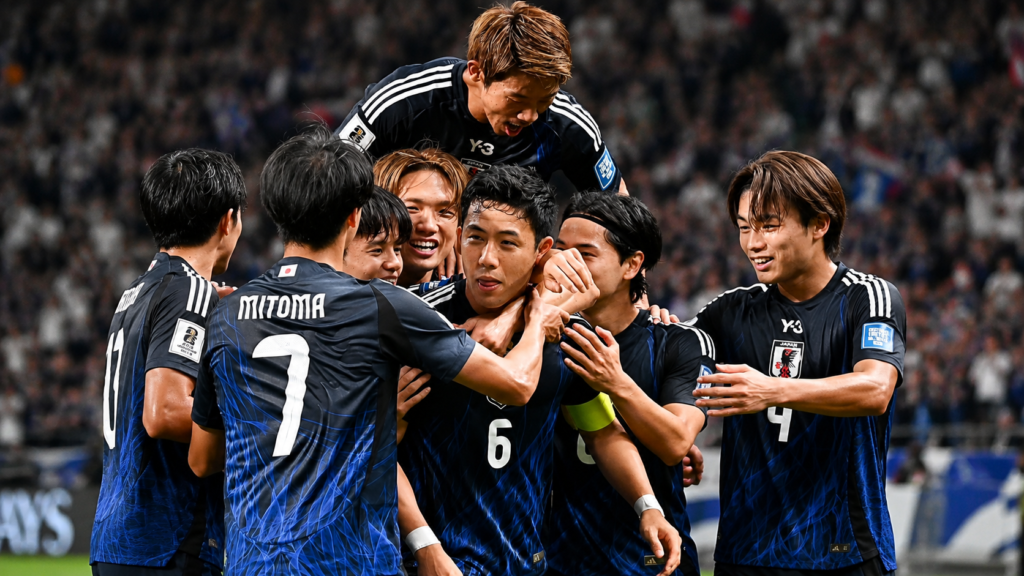
When discussions turn to World Cup favorites, the same names inevitably dominate the conversation. France, Argentina, England, Brazil and Spain attract the headlines, the predictions and the pressure.
Japan rarely do.
And that may be exactly what makes them so dangerous.
For years, the Samurai Blue have quietly established themselves as one of the most consistent national teams in world football. Their success has not been built around global superstars or record-breaking transfer fees. Instead, it has come through organization, discipline and a collective understanding of the game that few teams can match.
Japan’s rise has been gradual rather than dramatic. More players than ever are competing in Europe’s top leagues, gaining valuable experience against elite opposition every week. The result is a squad filled with technically gifted, tactically intelligent footballers capable of competing with anyone on their day.
History has shown that Japan thrive when expectations are low. They have repeatedly challenged football’s traditional powers and earned a reputation as one of the tournament’s most resilient teams.
As the World Cup unfolds, attention will naturally focus on the favorites. But while the spotlight shines elsewhere, Japan will continue preparing, believing and waiting for their opportunity.
And if recent tournaments have taught us anything, it is that overlooking Japan can be a very costly mistake.
The Silent Giants: Why Japan Continue To Trouble Football’s Biggest Nations
When football’s elite gather at the World Cup, attention naturally shifts toward traditional powerhouses such as Brazil, Argentina, France, Germany and England. Yet one nation has quietly built a reputation for unsettling those giants whenever the opportunity arises.
Japan may not arrive with the superstar status of some of their rivals, but the Samurai Blue have repeatedly shown they belong on football’s biggest stage.
Over the past decade, Japan have become one of the most respected teams outside football’s traditional elite. Their success has been built on technical quality, tactical discipline and an ability to perform under pressure against some of the world’s strongest opponents.
Their reputation for giant-killing was cemented during recent World Cups, where they earned memorable victories over European heavyweights and proved they could compete with anyone on their day. Rather than relying on individual brilliance, Japan thrive through collective organization and relentless work ethic.
That reputation was on display again in their recent World Cup clash against the Netherlands. Facing one of Europe’s most talented squads, Japan showed resilience and composure to earn a 2-2 draw. While many expected the Dutch to control proceedings, Japan matched them throughout the contest and demonstrated why they remain one of the tournament’s most dangerous outsiders.
The result was another reminder that Japan are no longer simply participants on the world stage. They are genuine competitors capable of challenging established football powers.
What makes Japan particularly dangerous is their growing influence across European football. More Japanese players than ever are competing in top leagues, gaining valuable experience against elite opposition every week. That experience is reflected in a national team that looks increasingly comfortable in high-pressure matches.
With crucial group-stage fixtures still ahead, Japan know tougher tests await. But if their performance against the Netherlands is any indication, the Samurai Blue are once again prepared to challenge expectations.
The favorites may dominate the headlines, but history suggests overlooking Japan is a mistake many football giants continue to make.
And at this World Cup, they may be ready to punish anyone who does.