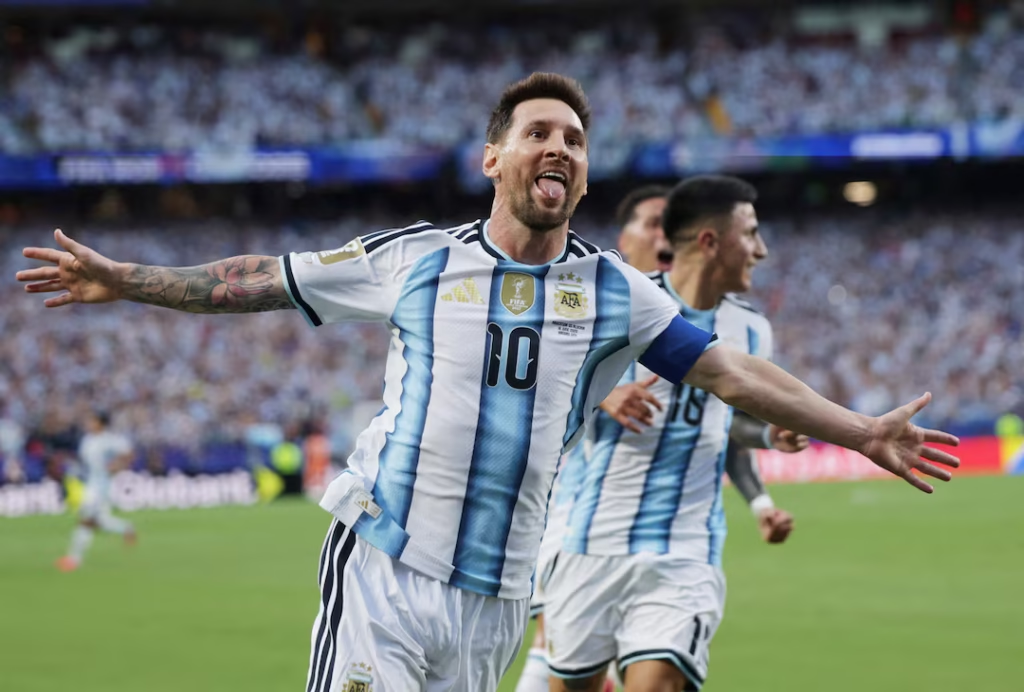
For nearly a decade, the record belonged to one man.
Now, it belongs to two.
Lionel Messi has once again etched his name into football history, scoring a sensational hat-trick against Algeria to draw level with Miroslav Klose as the FIFA World Cup’s all-time leading goalscorer.
Sixteen World Cup goals.
Two legends.
One throne.
It is a moment that perfectly captures the extraordinary career of a player who continues to redefine what is possible in football.
History Made Under the Brightest Lights
The World Cup has always been Messi’s ultimate stage.
From his teenage debut in Germany in 2006 to lifting the trophy in Qatar in 2022, the Argentine icon has delivered countless unforgettable moments.
Yet even by his remarkable standards, this night felt special.
Needing three goals to equal Klose’s long-standing record, Messi delivered a masterclass against Algeria, completing the first World Cup hat-trick of his career and moving level with the German legend on sixteen goals.
The achievement sparked celebrations among Argentina supporters and admiration across the football world.
Chasing a Record That Once Seemed Untouchable
When Miroslav Klose retired with sixteen World Cup goals, many believed the record could stand for decades.
The German striker had built his tally across four tournaments, combining consistency with an incredible ability to perform when the stakes were highest.
For years, the mark appeared out of reach.
Then came Messi.
Tournament after tournament, goal after goal, the Argentine captain steadily closed the gap.
Now, after twenty years of World Cup football, he finally stands alongside Klose at the summit.
More Than Just Goals
What makes Messi’s achievement even more remarkable is the variety of roles he has played throughout his World Cup career.
He has been a winger.
A playmaker.
A false nine.
A captain.
A leader.
Unlike traditional strikers whose primary responsibility is scoring, Messi has spent much of his career creating opportunities for teammates while still finding the net himself.
That makes his sixteen-goal tally even more extraordinary.
One Record, Two Legends
Football fans often compare players across generations.
Klose and Messi represent very different paths to greatness.
Klose built his reputation as one of football’s most clinical finishers, thriving inside the penalty area and consistently delivering for Germany.
Messi combined goals with creativity, becoming the focal point of Argentina’s attack for nearly two decades.
Yet both reached the same destination.
The top of the World Cup scoring charts.
The Record May Not Last Long
The most frightening part for Klose’s record is that Messi may not be finished yet.
Argentina still have matches remaining in the tournament, giving their captain the opportunity to become the sole owner of one of football’s most prestigious records.
One more goal.
That is all it would take.
And if history has taught football fans anything, it is never to doubt Lionel Messi when records are within reach.
Final Verdict
Some records define greatness.
Others define immortality.
By equaling Miroslav Klose’s World Cup scoring record, Lionel Messi has added another historic chapter to an already legendary career.
Sixteen goals.
Twenty years of World Cup football.
Countless unforgettable moments.
And perhaps one more record still waiting to be broken.
For now, the throne is shared.
But Messi’s story may not be finished yet.